


The Official Mort Kunstler Website
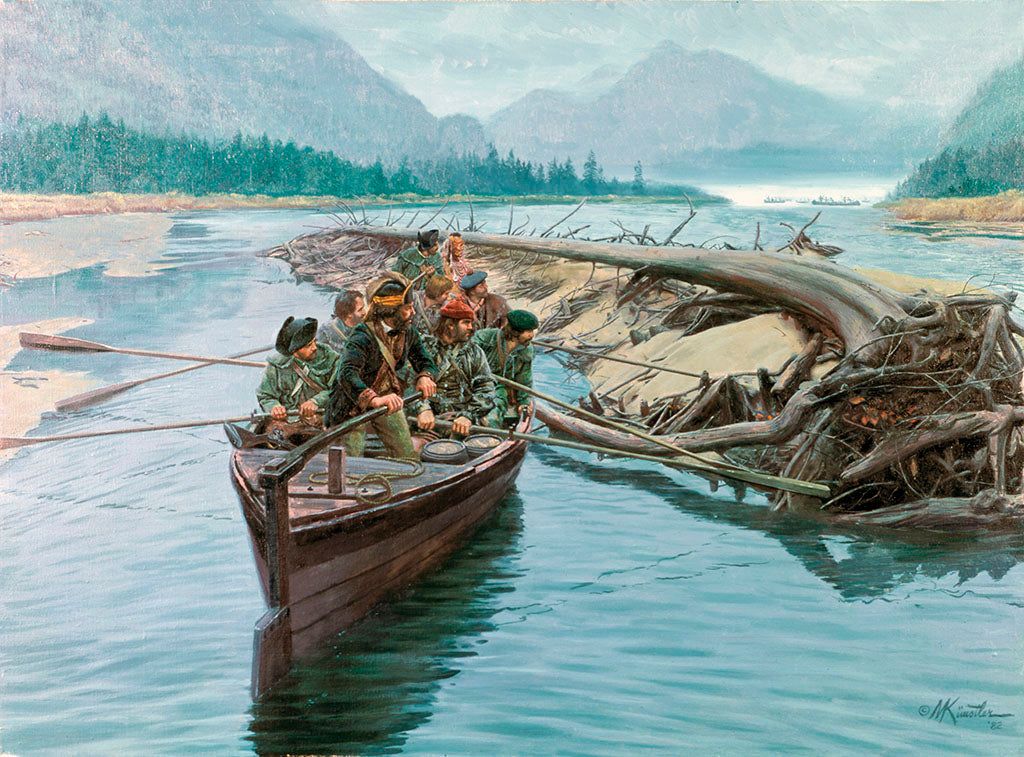
Rogers' Rangers on Lake Champlain - limited edition print
Rogers' Rangers on Lake Champlain - limited edition print
Lake Champlain, September 1759
Couldn't load pickup availability
The PREMIER and COLLECTOR'S editions ship FREE*, ROLLED and UNSTRETCHED. Stretching is available at an additional charge and for local pickup only. Please contact us for pricing: 800-850-1776 or info@mortkunstler.com.
* Free shipping within the Continental U.S.
LIMITED EDITION PRINTS
Giclée Canvas Prints
Reproduction technique: Giclées are printed with the finest archival pigmented inks on canvas. Each print is numbered and signed by the artist's daughter, Jane Künstler, and accompanied by a Certificate of Authenticity.
Signature Edition 19” x 26”
Signed & Numbered • Edition Size: 100
Signed Artist’s Proof • Edition Size: 10
Classic Edition 23” x 31”
Signed & Numbered• Edition Size: 50
Signed Artist’s Proof • Edition Size: 10
Premier Edition 28” x 38”
Signed & Numbered • Edition Size: 15
Signed Artist’s Proof • Edition Size: 5
Collector’s Edition 36” x 49”
Signed & Numbered • Edition Size: 5
Signed Artist’s Proof • Edition Size: 2
Historical Information
Two centuries of conflict came to a climax in the mid-eighteenth century in what Europeans called the Seven Years War and Americans the French and Indian War. It was waged by the soldiers of France and England, by hastily recruited colonials and French Canadians, by a score of Indian tribes, and by backwoodsmen and Indian fighters like Robert Rogers and his Rangers, who seemed to show up wherever the fighting was hottest – and the rewards most lucrative! Rogers's untrained, almost savage followers fought with Governor Johnson at Fort Niagara, with General Amherst at Crown Point and Ticonderoga, and at distant Michilimakinac at the junction of Lake Huron and Lake Michigan – a thousand miles to the west – and in the final battle of the war, the capture of Montreal in 1760, and then, even after France had succumbed, against Chief Pontiac and his Indian "rebels."
That victory meant that the English-speaking peoples could long dominate most of North America; it meant, too, the beginning of the end of Old World dominion over the New. All that took another century or more – a century that saw the independence of the United States and of the states of Latin America, the elimination of Russia from Alaska, and, with the Spanish American War, the final disappearance of Spain from the New World.
Mort Künstler's Comments
The exploits of Major Robert Rogers, as related in the great novel Northwest Passage by Kenneth Rogers, were the inspiration for this painting of Rogers and his men behind enemy lines during his famous raid on Saint Francis in the French and Indian War.